Radiant Feather Font: Elegant Script for Web Design
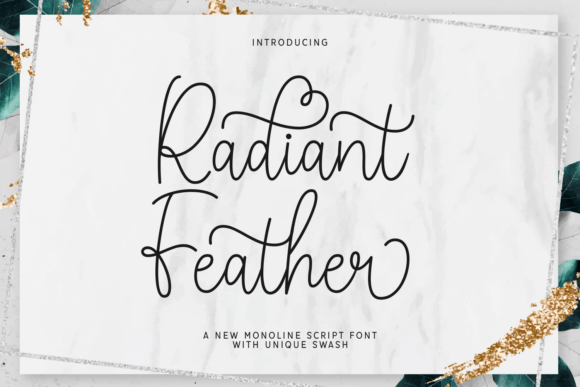
When designing digital experiences that require a touch of sophistication, finding the right typeface is often the difference between a generic layout and a memorable brand identity. Radiant Feather is a delicate and refined monoline script font that brings a specific kind of elegance to web projects. As designers, we often struggle to balance decorative appeal with digital functionality. This typeface addresses that challenge by offering graceful curves and unique swashes that remain legible across various screen sizes. It serves as a powerful tool for establishing visual hierarchy in hero sections, landing pages, and branded content where personality matters as much as utility.
Digital Readability and Visual Hierarchy
In web design, script fonts are frequently relegated to small accents because they fail at larger scales or become illegible on mobile devices. Radiant Feather distinguishes itself through its monoline construction. Unlike high-contrast scripts that can disappear against busy backgrounds or thin out too much on retina displays, this font maintains a consistent stroke weight. This characteristic is crucial for maintaining readability in responsive layouts. When used in website headers or hero sections, the uniform thickness ensures the letterforms hold their shape whether viewed on a 27-inch monitor or a smartphone screen.
Visual hierarchy relies on contrast, and Radiant Feather provides excellent textural contrast when paired with structured UI elements. Because it is a display font intended for short phrases, titles, and logos, it should not be used for body copy. Instead, utilize it to guide the user’s eye toward key conversion points. For example, using this script for a "Shop New Arrivals" banner creates an emotional connection that a standard sans serif font cannot achieve alone. The unique swashes act as visual arrows, subtly directing attention without the need for aggressive graphical elements.
Applications Across Digital Touchpoints
The versatility of Radiant Feather makes it suitable for a wide range of digital product categories. Its charm translates effectively across different web environments:
- Boutique E-Commerce: Use the font for category headers and promotional banners to convey craftsmanship and luxury. It pairs exceptionally well with minimalist product photography, adding warmth to clean grid layouts.
- Creative Portfolios: For photographers, artists, and wedding planners, this typeface communicates artistry. Implement it in navigation overlays or intro animations to set a refined tone before the user even engages with the work.
- Coaching and Wellness Sites: The soft, organic curves suggest approachability and empathy. It works beautifully for testimonial highlights, signature sign-offs, or section dividers on service pages.
- Social Media Graphics: Consistency across platforms builds brand trust. Using Radiant Feather in Instagram stories, Pinterest pins, and YouTube thumbnails ensures your web presence matches your social identity.
- Course Sales Pages: Break up dense sales copy with elegant subheadings. The font adds a premium feel to educational products, suggesting high value and careful curation.
Strategic Font Pairing for Web Interfaces
A script font never exists in isolation. To maximize the impact of Radiant Feather, you must pair it with supporting typography that grounds the design. The goal is to create a cohesive system where the script acts as the voice and the secondary font acts as the structure.
For modern SaaS platforms or tech-forward brands, pair Radiant Feather with a geometric sans serif font like Montserrat or Inter. The mathematical precision of the sans serif contrasts sharply with the organic flow of the script, creating a dynamic tension that feels contemporary and professional. This combination works well for landing pages where you need to balance creative flair with clear, scannable information architecture.
Alternatively, for editorial sites, fashion blogs, or heritage brands, consider pairing it with a classic serif font. A transitional serif like Playfair Display or Lora complements the traditional roots of script typography while ensuring excellent readability for long-form content. In this context, Radiant Feather serves as the decorative element for pull quotes and chapter titles, while the serif handles the narrative. Avoid pairing this font with other handwritten or decorative typefaces, as competing styles will clutter the interface and degrade the user experience.
Technical Considerations for Responsive Design
Implementing decorative fonts requires attention to technical detail. When integrating Radiant Feather into your web stack, always test rendering across browsers and operating systems. Monoline scripts can sometimes suffer from anti-aliasing issues at very small sizes. Establish a minimum font size threshold—typically 24px to 30px for desktop headings—to ensure the curves render smoothly. On mobile devices, you may need to adjust the line height and letter spacing slightly to prevent swashes from colliding with adjacent elements or getting clipped by viewport edges.
Consider accessibility when placing this font over images or colored backgrounds. Because the strokes are uniform, ensure there is sufficient contrast ratio between the text and its container. If using the font on a dark background, verify that the color choice meets WCAG standards. Light text on dark backgrounds can sometimes appear thinner due to optical illusion; you may need to increase the font weight or size slightly to compensate. Additionally, check if the font file includes OpenType features. Accessing alternate characters and ligatures via CSS allows you to customize the flow of specific words, preventing awkward connections and enhancing the bespoke feel of your digital design.
Licensing and Commercial Usage
As digital creators, respecting intellectual property is non-negotiable. Before deploying Radiant Feather on a live site, verify the licensing terms specific to your project scope. Webfont licenses typically differ from desktop licenses. A standard desktop license might cover logo design and static social media graphics, but serving the font files via @font-face on a commercial website usually requires a separate webfont license. Some foundries base pricing on monthly pageviews, so factor this into your client proposals or project budgets.
If you are building templates for sale, such as Shopify themes, WordPress templates, or Canva kits, you will likely need an extended or OEM license. These licenses allow end-users to utilize the font within the template without purchasing their own individual license. Clarifying these distinctions early prevents legal complications down the road. Always keep documentation of your purchase and license certificates organized within your project assets. This professionalism protects both you and your clients, ensuring that the elegance Radiant Feather brings to your designs is built on a foundation of ethical practice.
Ultimately, Radiant Feather offers web designers a reliable solution for injecting personality into digital spaces without sacrificing usability. By treating it as a strategic component of your typographic system rather than mere decoration, you can create online experiences that are both visually stunning and functionally robust. Whether refining a luxury brand identity or softening a corporate landing page, this typeface provides the delicate balance required for modern web aesthetics.